What does Quadratum look like as a school?
Screen-less Learning.
Comprehensively Self-Sufficiency.
Unabashed Intellectualism.
Irreducible Physicality.
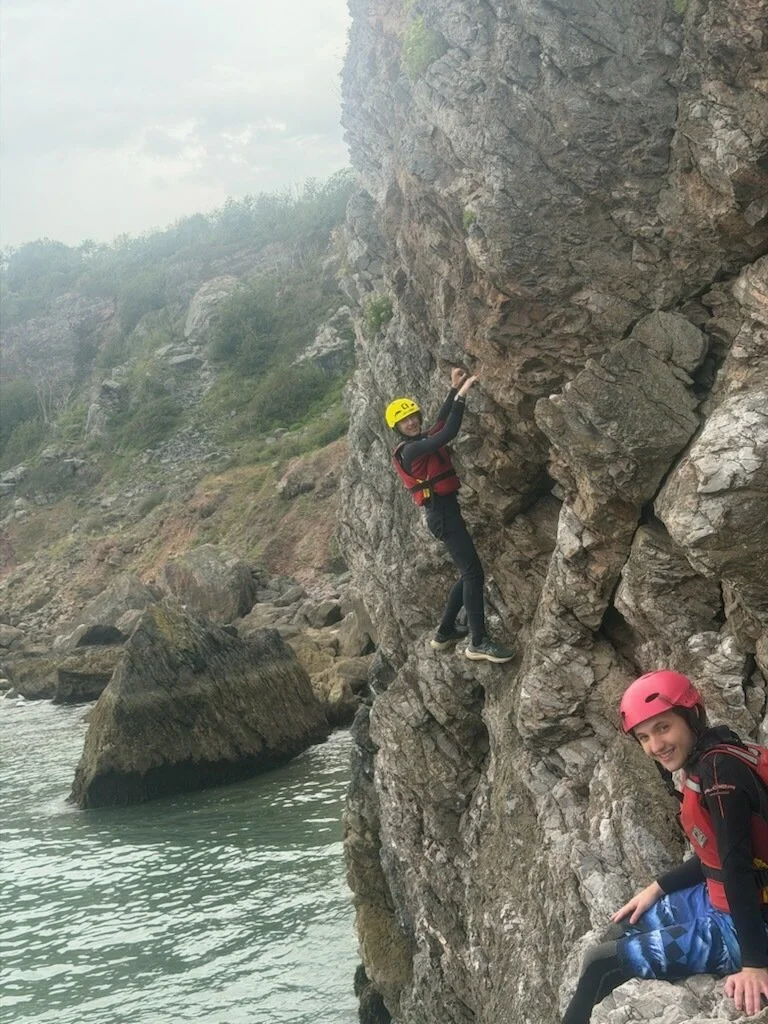
Only read this if:
You feel that a child’s scholastic growth does not happen optimally while sitting behind a desk, under fluorescent lights, and looking at a screen displaying an impersonal video with a person who — owing to the medium — cannot take or answer questions.
You feel that formerly inherited, ubiquitous skills — from cooking to light carpentry to house hygiene — are no longer automatically known skills that pass on infallibly and in fact deserve some purchase in the school setting.
You are an educator feeling handcuffed by administrative mandates to deploy superfluous technology; you remain compliant out of fear of reprisal or because a nagging voice tells you that you’re being a stick-in-the-mud forestalling “progress”.
You are a parent watching your child complete schoolwork by making “slideshows” consisting of ready-made clipart and single sentences to encapsulate complex subjects; you note that assessments feel automated, do not remove ignorance of the subject at hand, and allow for re-submission until a high grades is awarded, and that this not indicate actual accomplishment. It’s not that your child is uniquely more gifted than anyone else. Rather, you feel that all students are not receiving the challenges they merit.
You are a student who wants to explore physicality beyond sports, to musick beyond the level-appropriate pieces publishing houses sell to middle school and high school orchestras, bands, and choruses (and you have a suspicion that notation can do more than you’re being shown); to debate intelligently and develop the refined dialogical skillset requisite to lobbying with conviction; to take risks in order to find out what is really worth learning.
You believe students require meaningful outings that test their academic learning in a practical environment; that students can be responsible for their well-being and can live collaboratively; and that taking 6 trips to Mercedes-Benz stadium during middle school may not be the best use of field trip resources. Wish I was kidding.
You are a student that, when it comes to the performance aspect of musics (which is not the sole dimension of music but is presented as if it is), you are tired of being told you’re great, talented, and “superior” when you’re not.
Something has vanished in education, and while we at Quadratum mean to carve out a singularly focused pedagogical environment, we are aware of what is occurring writ-large. No one reads anymore. Fine. But we can read, and giving up with a helpless shrug is not a viable option. Reading only the safer excerpts from a work and avoiding its teeth does not fairly represent the work or respect its creative source. Working almost exclusively towards particular scoring metrics on standardized tests limits the generative capacity of young people. Let me put it this way: I don’t want to see my high school freshman doing word searches as part of his high school curriculum. That is neither an exaggeration nor an outlier; other work he does is of a similarly insipid nature.
We are all wary of a world where everyone is a high-ability thinker. What room will there be for my riches and my powers? How can I distinguish myself and my child as special? But what if we are so stuck in a concept of hierarchical rigidity that we cannot envision a most manifest-able situation where exceptionally-capable individuals also recognize the efficacy of interdependence and act as both humble leaders and eager followers, captains and soldiers, and managers and employees when called to do so.
To be its most effective and its most accessible to all those who value its teachings, Quadratum must be a school. As of now, our students accomplish things beyond what they should be able to. Here’s a hyper-granular example: if no other group of teenagers is capable of harmonized Anglican chant and ours can correctly enact the embodied co-presence of metrical rigor, lexical scope, and vocal production, imagine what they could do with more than two hours a week. In all earnestness, our pedagogical aspirations and students’ capacities lie beyond our current temporal resources. The many essential field trips we do are more difficult logistically than they should be, because we have to do them during weekends and families’ school breaks thereby making families sacrifice that precious time together. It is a testament to our students, families, and quality of our programming that they do grant us those days and times to go see Mark Warren at Medicine Bow; build out spaces and teach drumming at Murphy-Harpst; and take hikes at Arabia Mountain. We would love to learn from Mark once monthly, but to do that, we would need the weekdays. Beyond this screed, there are mini-treatises below that lay out what ways of thinking would undergird our functional policies. As far as the significant financial investment we require: we need people who need us. We do not merely need money — we need money from people who want what we want: self-reliant young people capable of thinking, creating, and providing for themselves.
Who knew that book banning could generate such fruitful dialogue? It has helped us clarify what a library’s role is, and how we as a school can form a meaningful curatorial thesis.
Choosing a side on the book ban issue in Marietta, Georgia or anywhere else is unhelpful and unproductive. Books’ inclusion in a library — particularly an academic library — is inevitably a matter of selection and exclusion. There is not one side to stick to, because libraries do not serve static purposes one school to another. What then are ways to determine inclusion or exclusion from particular sites serving particular student bodies?
Assume that for a moment that, as a fundamenal premise, explicit sexual content should be withheld from students until a certain age is met. Let’s move towards a situation where we agree that that age is met, itself a data-point for debate: While the presence of graphic same-sex sexual content in a book may be indeed distasteful, it alone is neither a criterion for disqualification or qualification, any more or less than graphic opposite-sex, incestuous, or bestial content would be (see Bible, The).
In terms of such content’s curricular or librarial inclusion, I’m seeing schools deploy a surfeit of excerpts of larger books that may be justified by efficiency arguments, but are we eschewing the discomfiting sections by rationalizing them as inessential? Is it the academic instructor’s right to determine what parts of an author’s book are and are not essential to its teaching. Context matters, but if we are teaching a “book,” it is high-handed to excise parts of it as unnecessary, particularly if that is because it makes us uneasy. Nature sure has beautiful views, don’t it? It’s also deadly. And essentially so. Avoiding that is obviously incomplete education.
To summarize so far: unsavory, uncomfortable, even grotesque content neither justifies nor disqualifies a book’s worthiness. So let’s give our future librarian some guidelines:
Time
Style
Impact
Time
This first criterion protects the second two criteria; that is, duration helpfully rewards lasting impact. Likewise, readers who succumb to being prisoners of the moment may overlook stylistic inadequacies. Therefore, the book must be no less than ten years old in terms of its publication. This avoids recency bias overly affecting the perception of impact. One of the books in question at Marietta High School — Flamer, by Michael Curato — would therefore be moot. In that book’s defense, I have not read it. I don’t know if it was particularly well written or carried impact beyond its cultural shock value. I bristle at the co-presence of instant martyrdom and instant vilification; that may be an unfortunate by-product of the book and not its “fault”, per se. I also find that graphic novels sure are taking up a disproportionate amount of space on the shelves — that’s a personal bias that I would not impose upon an independent librarian. Would it come up during an interview process, though? Yes, it would. Ze would have to convince us, and it would certainly be nice to have a librarian skilled in persuasion and rhetoric.
If the book in question is worth reading, even on the basis of impact alone, then its impact must and should be able to withstand a decade’s passing. If not, and its impact is Zeitgeist-dependent, it is not worth including. If a student has to be told, “at the time, this was actually very incendiary and important,” then that certainly undermines a student’s own ability to perceive, even if they sometimes do need to be told what is worth their time.
Style
This gets into the crux of the matter: quality of writing. This is subjective but only to a point. That is, is the work’s mechanics sound? Are the syntax, grammar, punctuation correct? Those traits can be assessed, whether in a work’s original language or its translation. Then, does the writing convey the meaning of its content efficiently and thoroughly? Is its language vivid as appropriate to the work’s intention? Is that intention itself clear? And, for our purposes, at all relevant? Which takes us to…
Impact
Let’s pretend for a moment that the Bible is not particularly well written. Considering that I do not know anyone who is not reading a translation of the Bible, then I partly mean “well-translated.'“ Regardless, its overwhelmingly outsized impact renders that criterion utterly negligible. Other ways to assess impact include translation. Has the book been translated to English, since we will undoubtedly read it in English? Has it been translated from English? This also speaks to the effectiveness of its writing style. That is, if a style’s effectiveness transcends its vernacular, then that writer (and translator combination) is no doubt potent.
Other factors may inform a particular librarian’s curatorial thesis. I would not include the Harry Potter series — even though it arguably satisfies all of the above criteria — because I believe the content is too focused on entertainment and does not challenge the reader. Here, I am perhaps privileging the need for material that presses upon comfort for inclusion in an academic library.
As for Harry Potter, the other disqualifying aspect would be access. Its ubiquity means that this particular library is not compelled to make it available to students. Less-accessible books take priority.
I recognize that Herman Hesse’s Narziss and Goldmund would probably not be taught in modern public schools, but its inclusion in a library should would be a priority for me. If a teacher wished to include it in a syllabus where its inclusion was relevant to the course writ-large, I would personally not object. And if there was a voice of influence that did object, I would like for the objection to be potent considering that it would satisfy the library’s inclusion criteria. Since this is a live issue, let’s imagine that a book of such high writing quality is objected to.
I’ve a feeling objectors would point to:
An excessively male gaze
A Euro-centric or Euro-derived cultural milieu
Women’s role as fundamentally sexual
and that would be a shame. Because: its lessons are there for all to read; its female characters are often complex and rarely flat, even if sexuality is the canvas in which they manifest; and the gaze, while male, is honest and unapologetic; therefore, valuable time is not wasted justifying the content from within the book itself, this creative freedom being a frequent perquisite of late-in-life authorship. And, notwithstanding its obviousness, there are different male gazes at hand. It is possible for the category of “men” to not mean utter homogeneity? Isn’t the un-flattening power of plurality a crucial part of learning, and shouldn’t it in fact be expected in all works of quality?